


Supplier quotes are an important input when preparing commercial plumbing estimates. Contractors use supplier pricing to establish the cost of pipework, fittings, fixtures, valves, equipment, and other materials required for a project.
But a supplier quote does not automatically represent the complete material cost for the tender.
A supplier prices the products and quantities included in the quotation request. The estimator still needs to determine whether those items cover the requirements identified in the project documentation and whether anything needs to be priced separately.
Understanding what supplier quotes can miss in plumbing estimates can help contractors identify material gaps before finalising a tender.
Why Supplier Quotes Are Used in Plumbing Estimating
Supplier pricing gives contractors a current reference for the cost of materials required for a project.
A typical estimating process may involve completing a takeoff, identifying required materials, requesting supplier pricing, and incorporating the returned prices into the overall estimate.
This is common in tendering, where contractors may request project-specific pricing for larger material requirements. Estimators also vary how heavily they rely on supplier quotes depending on the stage and type of tender.
The important point is that supplier pricing supports the estimate. It does not replace the estimator’s review of the complete plumbing scope.
What Can a Supplier Quote Miss?
A supplier quote can be accurate based on the information provided while still leaving gaps in the contractor’s commercial plumbing estimate.
1. Items Not Included in the Quote Request
A supplier can only price what has been requested.
If a material schedule or quotation request does not include a particular component, the supplier may not include it in the returned price.
This can happen when quantities are incomplete or when smaller components are overlooked during the initial material list.
The estimator therefore needs to compare the supplier’s quote against the complete takeoff rather than assume the supplier has identified every required item.
2. Ancillary Materials
The main pipework, fittings, fixtures, and equipment may receive most of the attention during material pricing, while smaller associated components can be overlooked.
Depending on the project, these may include:
- Connection components
- Valves and accessories
- Supports and brackets
- Fixings and fasteners
- Seals and consumables
- Accessory fittings
- Other installation-related materials
Individually, these items may not represent a major cost. Across a commercial plumbing project, however, multiple omissions can affect overall material allowance.
3. Different Product Requirements
The supplier may quote a product based on the information provided, but the quoted item still needs to be checked against the project requirements.
Commercial tenders can contain requirements for specific:
- Manufacturers
- Product types
- Standards
- Performance requirements
- Fixture selections
- Finishes
- Approved products
If the supplier’s quote is based on an alternative product, the estimator needs to establish whether it is appropriate for the tender before using that price.
4. Separately Priced or Excluded Items
Supplier quotations may contain items that are excluded, optional, provisional, or priced separately.
These supplier quote exclusions need to be identified before the quotation is transferred into the final plumbing estimate.
A low total can look attractive until separately priced items are added back into the material cost.
5. Changes to the Tender
Supplier pricing can also become incomplete when project information changes.
Revised drawings, specifications, fixture schedules, quantities, or product selections can affect the material requirement.
If the supplier quote was based on an earlier version of the tender documentation, the estimator should confirm whether the pricing still reflects the current requirements.
Supplier Quote vs Complete Material Estimate
It is important to distinguish between the two.
| Supplier Quote | Plumbing Material Estimate |
| Prices requested products | Accounts for required materials |
| Based on the quotation request | Based on the project scope and takeoff |
| May contain exclusions | Identifies items that need separate pricing |
| Provides supplier-specific pricing | Consolidates applicable material costs |
| Has quotation conditions | Must support the contractor’s tender price |
The supplier is pricing the requested supply. The contractor is responsible for ensuring the tender price reflects the scope being offered.
How Contractors Can Check Supplier Pricing
Before using supplier pricing in a commercial plumbing estimate, it helps to run a quick check across quantities, products, inclusions, exclusions, and quote validity. Getting this right is its own process, and small differences in any one of these areas can change what the quote is actually covering.
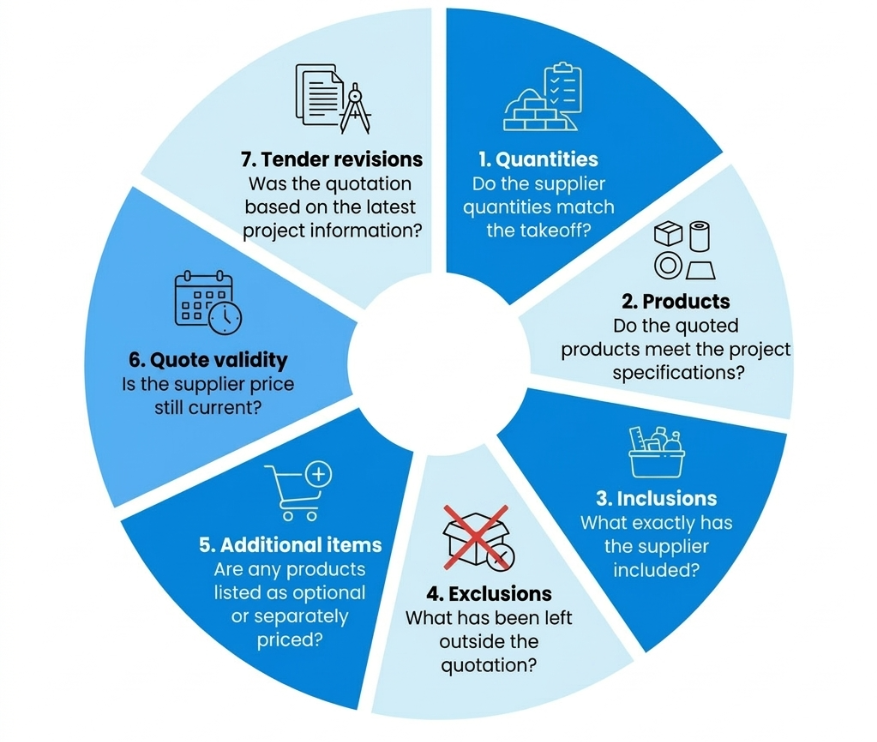
If you’re comparing pricing from more than one supplier for the same requirement, that check becomes more involved. See our guide on how to compare supplier quotes on a like-for-like basis for the full method, including a worked example of normalising two quotes on the same basis.
What Happens When a Supplier Quote Is Incomplete?
The main risk is that the contractor carries an incomplete material cost into the tender.
Once the project is awarded, missing materials still need to be purchased. If those costs were not allowed in the original estimate, they can reduce the contractor’s expected margin.
The issue may not be that the supplier provided incorrect pricing. The issue may simply be that the quotation did not cover everything required for the contractor’s scope.
That distinction is important when reviewing supplier pricing.
Supplier Quotes Should Support the Estimate, Not Define It
Supplier pricing provides valuable information for commercial plumbing estimating, but the supplier quotation should remain in one input within the overall estimating process.
The estimator still needs to verify quantities, products, exclusions, and project requirements before finalising the material cost.
A supplier quote can tell you what the supplier has priced. The commercial plumbing estimate needs to establish what the project requires.
That difference can help contractors identify missing material costs before submitting a tender.
If you need help reviewing your plumbing and drainage scope against your supplier quotes before a tender goes out, send your project documents to ePlumbing Estimators.